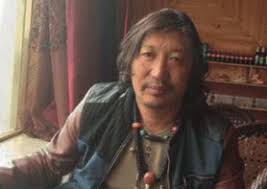
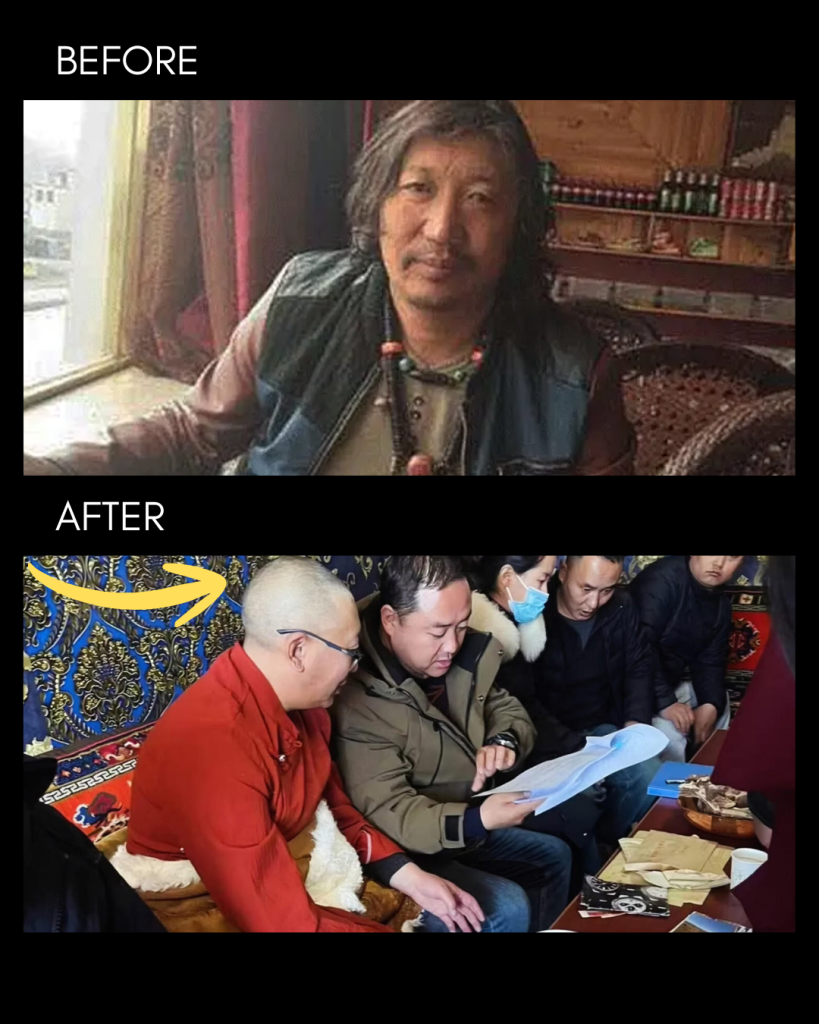
The Tibetan Centre for Human Rights and Democracy has learned about the release of popular Tibetan anti-corruption activist and community leader A-nya Sengdra on 7 February after serving more than seven years in Menyuan Prison in Qinghai Province.
A-nya Sengdra, 55, has returned to his home in Kyangche (Ch: Jiangqian) Township, Gade (Ch: Gande) County, Golok (Ch: Guoluo) Tibetan Autonomous Prefecture, Qinghai province, in the Tibetan region of Amdo, after completing a prison sentence of more than seven years. Sourced informed TCHRD that he is in poor health following his release. He reportedly suffers from kidney disease, severe deterioration of his eyesight, and high blood pressure.
Despite his serious medical needs, Chinese authorities have imposed restrictions on him and his family since his return. Officials have warned family members not to share any information, photographs, or details regarding his release with individuals outside the area. Sources also indicate that authorities have obstructed attempts to seek medical treatment, particularly outside the locality.
On 6 December 2019, the Gade County People’s Court sentenced A-nya Sengdra to seven years in prison on charges of “picking quarrels and provoking trouble” and “disrupting public order.” These vaguely defined offenses are commonly used by Chinese authorities to prosecute peaceful critics, activists, and community leaders. Although he was due for release in September 2025, authorities extended his prison term by an additional five months. The same court sentenced his associates, Soedung, Chinthrun, A-shol, Do Sang, Wangyal, Gyaltsen, Ngogbey, Orgyen Tsering, and Wangchen to varying prison terms in connection with the same case. To date, there is no publicly available information regarding their current conditions or whether they have had access to legal counsel and family visits.
A-nya Sengdra was detained on 4 September 2018 by officers from the Gade County Public Security Bureau at a highway intersection in Golok prefecture. According to multiple sources, he was beaten at the time of arrest.
Since at least 2014, A-nya Sengdra had been a prominent voice against alleged corruption and environmental exploitation in his area. Together with fellow Tibetan nomads, he helped establish a voluntary civic initiative known as “Mang Dhon Ling” (Public Affairs Forum). The group aimed to expose corruption, monitor local governance, and address abuses of power by local officials. He publicly criticized authorities for alleged misappropriation of public funds and organized campaigns opposing illegal mining activities and the hunting and poaching of endangered wildlife.
His activism earned him significant respect within the local community. In December 2014, local Tibetans elected him as head of the village pastoral animal husbandry committee. Days later, on 14 December 2014, he was arrested by authorities. He was subsequently sentenced to one year and ten months in prison and released on 18 October 2016 from Dongchuan Prison in Siling (Ch: Xining).
Following his 2019 conviction, his lawyer, Lin Qilei, filed appeals with the Intermediate People’s Court of Golok Tibetan Autonomous Prefecture and later with the Higher People’s Court of Qinghai province. Both courts upheld the original sentence. According to Lin, A-nya Sengdra’s health deteriorated significantly during his imprisonment, and he lost a considerable amount of weight.
Since his arrest in September 2018, hundreds of Tibetans have submitted at least three petitions challenging the legality of his detention and calling for his immediate release.
The reported denial and obstruction of medical treatment following A-nya Sengdra’s release give rise to serious human rights concerns. As a state party to the Convention against Torture and Other Cruel, Inhuman or Degrading Treatment or Punishment, China is legally bound to prevent acts of torture and ill-treatment, to conduct prompt and impartial investigations into credible allegations of abuse, and to ensure effective remedies where violations are found.
“The Chinese authorities should immediately end all extra-legal restrictions imposed on A-nya Sengdra and his family and guarantee his timely and unhindered access to appropriate and specialized medical care,” said Dawa Tashi, researcher at the Tibetan Centre for Human Rights and Democracy.


