China shuts one of the few remaining Tibetan private schools in Golok, Detains principal
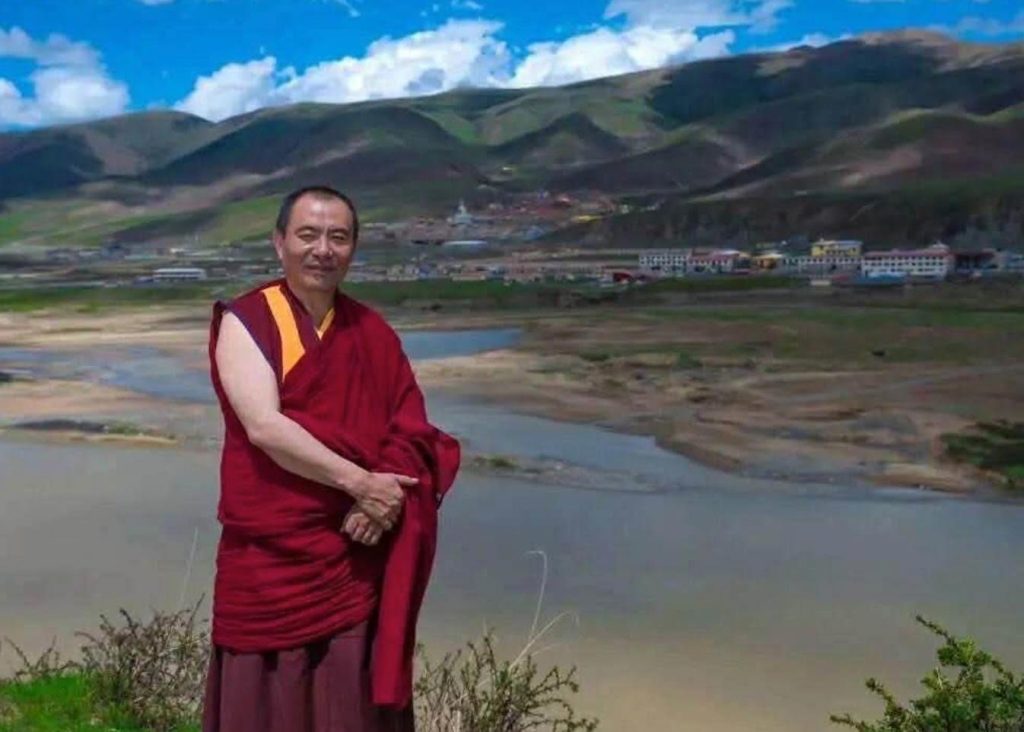
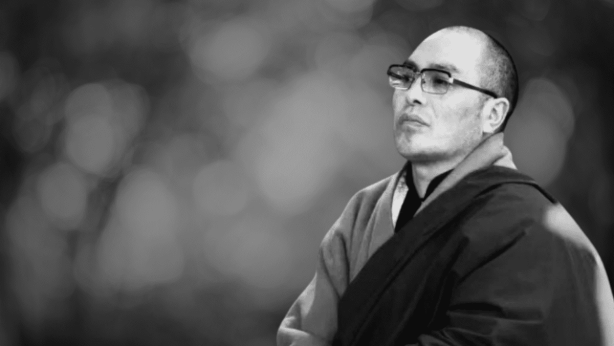
On 4 December, Chinese authorities arbitrarily detained Choktrul Dorje Ten, founder and principal of Dorje Ten National Vocational and Technical School in Chikdril (Ch: Jiuzhi) County, Golok (Ch: Guoluo) Tibetan Autonomous Prefecture, Qinghai Province, in the Tibetan province of Amdo. Shortly after his detention, authorities ordered the closure of the school and sent all students home, ending operations at one of the few remaining privately run Tibetan educational schools in the region. His current whereabouts and conditions remain unknown.
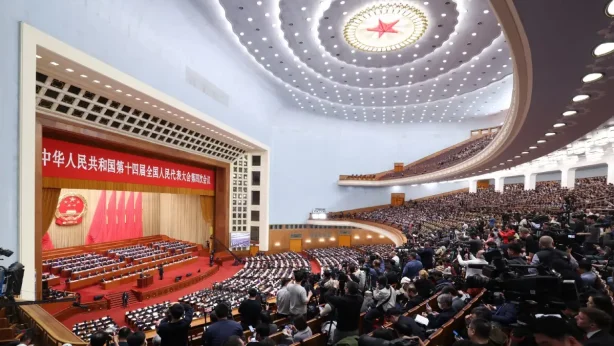
Choktrul Dorje Ten was born on 25 October 1967 in Minthang Township, Chikdril County. A respected religious figure, he chose to prioritize education for Tibetan children over his own religious practice, postponing a personal retreat to dedicate himself to building schools. His work began in 1997, when he founded Nyenpo Yurtse Hope Primary School. The school provided free education, food, and accommodation to the children from nomadic and poor families. At the time, he also served as the Vice Chairman of the Chikdril County Committee of the Chinese People’s Political Consultative Conference (CPPCC), a representative of the 14th People’s Congress, and a standing director of the Buddhist Association of Golog Prefecture.
As his early students completed compulsory education, Dorje Ten observed that many were forced to return to herding due to lack of further educational opportunities. In response, and with approval from the Golok Prefectural Government, he established Dorje Ten National Vocational and Technical School in August 2010, in accordance with the Education Law, the Law on the Promotion of Private Education, and the Golok Tibetan Autonomous Prefecture Vocational Education Work Plan.
The school offered vocational training in thangka painting, tailoring, tent-making, Tibetan medicine, and tourism, alongside academic instruction in Tibetan, Chinese, English, Mathematics, Calligraphy, politics, and physical education. Classes were offered both online and offline, with professional instructors recruited from other regions to ensure quality training. The campus covered an area of 94,000 square meters, with a total building area of 8000 square meters, including 2,523.06 square meters of teaching space and 5355.43 square meters of dormitories.
Over the years, Dorje Ten National Vocational and Technical School has trained more than 5000 students, of whom more than 1000 have been admitted to colleges and universities both inside and outside the province. Despite suffering from Diabetes, Dorje Ten remained actively involved in the school’s leadership and daily operations.
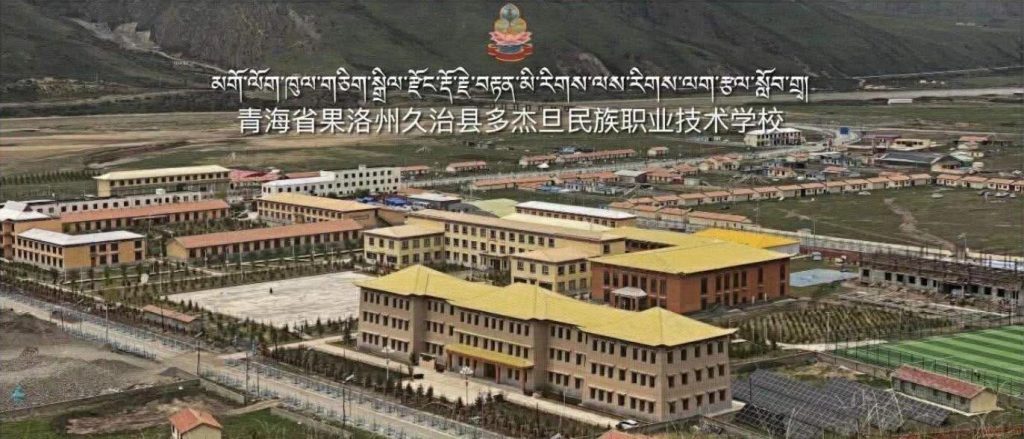
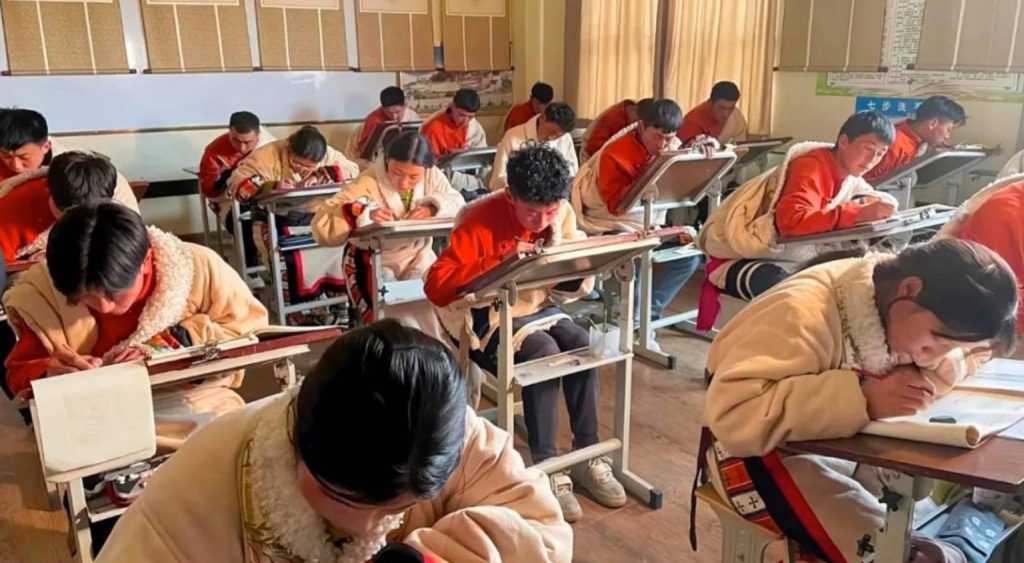
Students at Dorje Ten National Vocational and Technical School
He consistently articulated his belief that education was fundamental to the development and progress of Tibet and the Tibetan people. In a 2019 interview with the China Volunteer magazine, he explained that education should be rooted in ethnic awareness and serve as a cornerstone of both national and ethnic unity. He emphasized that education must address external, material needs while also nurturing internal intellectual and spiritual development. Stating that from the moment he entered the field of education, he resolved to persevere through any hardship, carrying a deep sense of responsibility toward his people and the future generations.
Tibetans have historically established private schools to preserve Tibetan language and culture while improving employment prospects in the local labor markets increasingly dominated by Han Chinese. However, even schools that once held official approval have not been spared. Sengdruk Taktse Middle School, formally established with official government approval in 1999, was forcibly closed in 2021 for allegedly failing to meet newly imposed regulatory criteria, demonstrating that official recognition no longer guarantees operational security for private Tibetan schools. In 2024, Jigme Gyaltsen Nationalities Vocational School was similarly closed.
The closure of Dorje Ten National Vocational and Technical School signifies the growing trend of Chinese authorities tightening control over private education, particularly in Tibetan areas. In May 2021, China amended the Regulations on the Implementation of the Law on the Promotion of Privately-run Schools which came into effect on 1 September 2021. These amendments centralized Party authority over private schools by requiring the establishment of supervisory bodies controlled by CCP and mandate ideological and political training for teachers, giving The Party direct influence over school governance and curriculum.
In July 2021,the Ministry of Education issued a related notice requiring schools providing compulsory education to meet the so called ‘six independences,’ including independent legal status, campuses, teachers, accounting, enrollment, and certificate authority or be converted into public schools. These requirements have led to closures of long standing private or semi private Tibetan schools. These policies significantly reduce the space for independent Tibetan education, forcing students into state run boarding Mandarin medium schools and curtailing instruction in Tibetan language and culture.
The shutdown of Dorje Ten National Vocational and Technical School, one of the last privately run Tibetan schools in the region and the detention of its principal form part of a broader campaign to assert Party control over education and use the schooling system as a tool to propagate pro-CCP ideology among Tibetan children, accelerating policies of cultural assimilation.